Zinc Sulfide
ZnS
Tough, broadband ZnS for windows that must survive the field — IR astronomy, security, automotive night vision and industrial infrared.
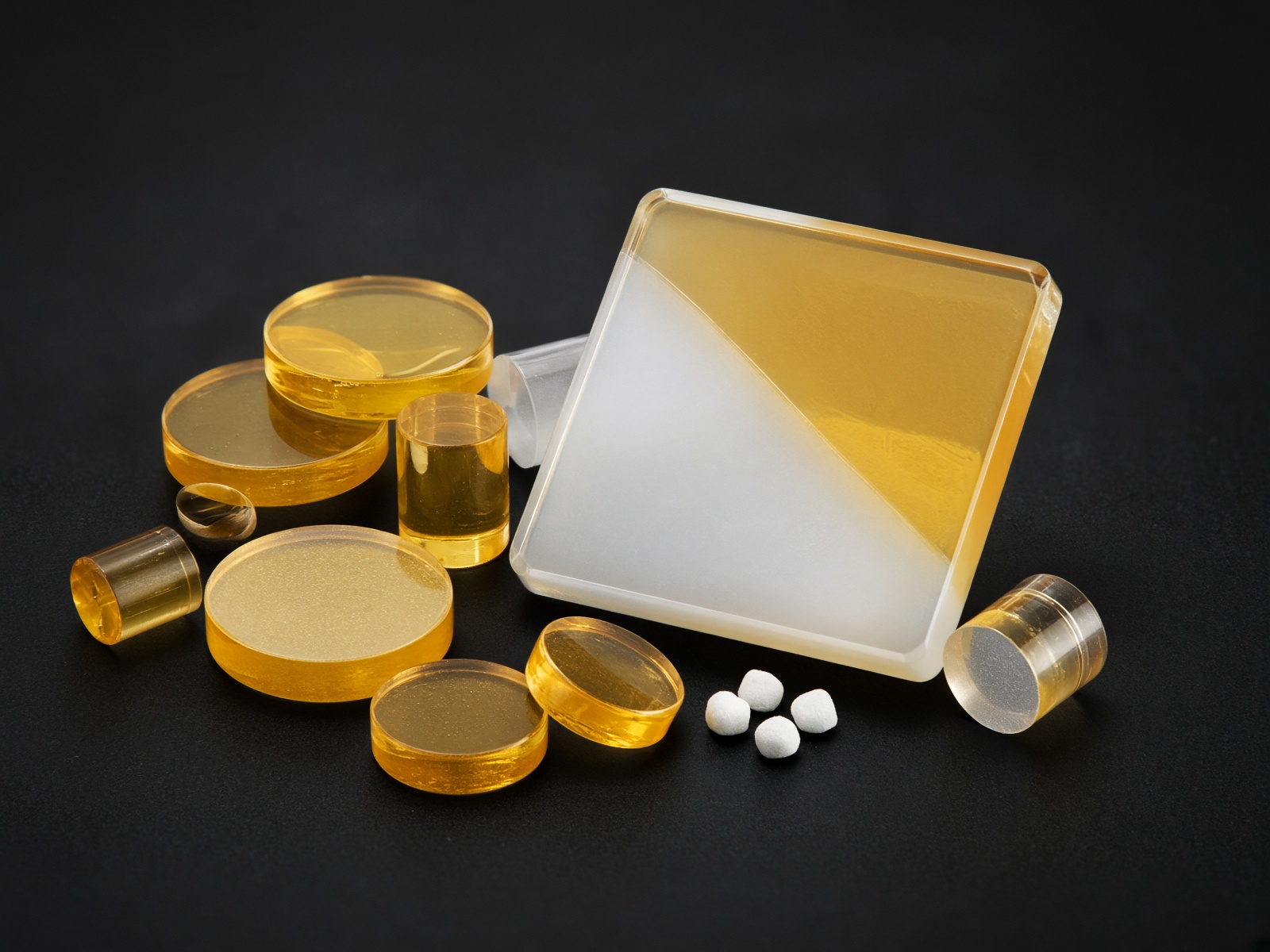
Used in
IR astronomy, security and automotive night vision, industrial and scientific instruments from visible through LWIR.
- Multispectral windows for visible-through-LWIR
- Hard-carbon compatible durable coatings
- Mechanical toughness for external windows
Capability
| Diameter | φ5 – 300 mm | |
|---|---|---|
| Scratch / Dig | 20 / 10 | 1300 Lux |
| PV | λ/8 @ 632.8 nm | Zygo |
| Irregularity | 0.1 λ @ 632.8 nm | Zygo |
| RMS | λ/40 @ 632.8 nm | Zygo |
| Parallelism / decentration | 3″ / 30″ |
Forms & coatings
Forms
- Windows (round / rectangular)
- Lenses (plano-convex, biconvex, meniscus)
- Prisms, wedges, aspheres
- Special-shaped components
Coatings
- BBAR 8–12 µm
- BBAR 2–14 µm
- HD + AR 7.8–14 µm
Curves are measured on 1–2 mm plane-parallel witness coupons.
Questions buyers ask
- When should I choose ZnS instead of ZnSe?
- Choose ZnS for external windows that need higher hardness, rain-erosion resistance or visible-through-LWIR transmission. ZnSe remains preferred for high-power CO₂ laser lenses because of lower 10.6 µm absorption.
- Do you coat ZnS with DLC or hard carbon?
- Yes. HD + AR 7.8–14 µm stacks are catalog coatings for outdoor thermal windows. Tell us the environment (wash, sand, salt) so we can match durability.
- Is ZnS suitable for automotive night-vision windows?
- Yes. We polish ZnS cabin and ADAS night-vision windows with durable AR/HD coatings specified for weather, wash and stone impact.
Transmission windows
One factory, 0.4 to 21 µm
Pick a material by infrared band. Typical design windows overlay a log-scale spectrum from NIR through LWIR.
NIRSWIRMWIRLWIRFIR
0.4 µm2.558–1221 µm
- ZnSe0.6 – 21 µm
- ZnS0.4 – 12 µm
- Si1.2 – 7 µm
- ChG1 – 14 µm
Other substrates